

Introduction
Introduction
The business landscape is evolving faster than ever before. Artificial Intelligence (AI), cloud computing, cybersecurity, automation, data analytics, and digital transformation are reshaping industries across the globe. As organizations strive to remain competitive in 2026, one factor has emerged as a decisive differentiator: a skilled and adaptable workforce.
Technology investments alone are no longer enough. Companies need employees who can effectively use, manage, and innovate with these technologies. This is where corporate training becomes essential.
Corporate training is no longer viewed as an optional employee benefit. It has become a strategic business investment that directly impacts productivity, profitability, innovation, employee retention, customer satisfaction, and overall organizational growth.
Organizations that prioritize employee learning and development consistently outperform competitors by building future-ready teams capable of adapting to changing market demands. Whether it is upskilling existing employees, reskilling teams for new technologies, leadership development, or compliance training, corporate learning programs are driving business success worldwide.
In this article, we explore why corporate training is critical for business growth in 2026 and how organizations can leverage training initiatives to achieve sustainable success.
The Growing Skills Gap in 2026
The Growing Skills Gap in 2026
One of the biggest challenges organizations face today is the widening skills gap.
Technologies are advancing faster than educational systems can adapt. As a result, many employees lack the skills required to handle modern business challenges.
Companies are increasingly adopting:
Artificial Intelligence (AI)
Machine Learning (ML)
Cybersecurity Solutions
Cloud Platforms
Data Analytics
DevOps Automation
Enterprise Networking
Digital Transformation Tools
However, implementing these technologies without skilled professionals often leads to:
Project failures
Security vulnerabilities
Reduced productivity
Higher operational costs
Delayed digital transformation initiatives
Corporate training bridges this gap by ensuring employees acquire relevant skills aligned with organizational goals.

Corporate Training Improves Employee Productivity
Corporate Training Improves Employee Productivity
Productivity remains one of the most important drivers of business growth.
Employees who receive regular training:
Complete tasks faster
Make fewer mistakes
Adapt quickly to new tools
Collaborate more effectively
Solve problems efficiently
When employees understand systems, processes, and technologies better, they spend less time troubleshooting and more time delivering results.
For example:
A cloud engineer trained on AWS or Azure can deploy infrastructure significantly faster than someone learning on the job.
Similarly, a cybersecurity analyst trained on modern threat detection tools can identify and mitigate attacks more efficiently.
The result is improved operational performance across the organization.
Enhancing Employee Retention Through Learning Opportunities
Enhancing Employee Retention Through Learning Opportunities
Employee retention has become a major concern for organizations worldwide.
In 2026, professionals are increasingly seeking employers that invest in their career development.
Research consistently shows that employees are more likely to stay with companies that offer:
Professional development programs
Certification opportunities
Leadership training
Technical skill enhancement
Career advancement pathways
When employees feel valued and see opportunities for growth, they are less likely to seek employment elsewhere.
This reduces:
Recruitment costs
Hiring expenses
Onboarding efforts
Knowledge loss
Organizations that prioritize learning create a culture where employees remain engaged and committed.
Supporting Digital Transformation Initiatives
Supporting Digital Transformation Initiatives
Digital transformation continues to be a top business priority.
Organizations are investing heavily in:
Cloud Migration
AI Adoption
Cybersecurity Modernization
Automation Technologies
Data Analytics Platforms
However, digital transformation succeeds only when employees know how to use these technologies effectively.
Without proper training:
Adoption rates remain low
Projects face delays
Technology investments fail to generate ROI
Corporate training ensures employees understand:
New systems
Business processes
Security practices
Digital workflows
This accelerates digital transformation and maximizes technology investments.
Driving Innovation Across Teams
Driving Innovation Across Teams
Innovation is essential for long-term business growth.
Organizations that encourage continuous learning create environments where employees:
Think creatively
Solve complex challenges
Develop new solutions
Explore emerging technologies
Training programs expose employees to:
Industry trends
Best practices
New technologies
Advanced methodologies
As a result, teams become more innovative and proactive.
Companies that continuously upskill their workforce are better positioned to:
Launch new products
Improve services
Enter new markets
Respond to industry disruptions
Innovation starts with knowledge.
Building Future-Ready Leadership
Building Future-Ready Leadership
Leadership development is a crucial aspect of corporate training.
Many organizations struggle because technical experts are promoted into management positions without receiving leadership training.
Corporate leadership programs help managers develop:
Communication skills
Strategic thinking
Decision-making abilities
Conflict resolution skills
Team management expertise
Strong leaders:
Improve employee engagement
Increase team productivity
Drive organizational growth
Support company culture
Investing in leadership training creates a strong management pipeline for future business expansion.
Strengthening Cybersecurity Awareness
Strengthening Cybersecurity Awareness
Cybersecurity threats continue to increase in sophistication.
Organizations face risks such as:
Phishing attacks
Ransomware
Data breaches
Insider threats
Social engineering attacks
Technology alone cannot eliminate cybersecurity risks.
Employees remain the first line of defense
.
Corporate cybersecurity training helps employees:
Recognize threats
Follow security protocols
Protect sensitive information
Respond to incidents effectively
Organizations that prioritize cybersecurity awareness reduce vulnerabilities and strengthen their security posture.
Improving Customer Satisfaction
Improving Customer Satisfaction
Customers expect exceptional experiences.
Employees who receive regular training are better equipped to:
Understand customer needs
Resolve issues quickly
Deliver consistent service
Communicate effectively
Customer-facing teams benefit from training in:
Product knowledge
Communication skills
Relationship management
Problem-solving techniques
Satisfied customers are more likely to:
Remain loyal
Recommend services
Increase spending
This directly contributes to business growth.
Supporting Remote and Hybrid Workforces
Supporting Remote and Hybrid Workforces
Remote and hybrid work models have become permanent for many organizations.
Managing distributed teams requires employees to master:
Virtual collaboration tools
Digital communication platforms
Cloud applications
Remote security practices
Corporate training ensures remote employees remain:
Productive
Connected
Engaged
Aligned with business objectives
Organizations that provide ongoing training for remote teams experience stronger performance and collaboration.
Increasing Organizational Agility
Increasing Organizational Agility
Business environments change rapidly.
Organizations must adapt quickly to:
Market shifts
Customer expectations
Technological advancements
Economic changes
A well-trained workforce enables organizations to respond faster.
Employees who continuously learn can:
Adapt to new roles
Learn emerging technologies
Support business transitions
Embrace change effectively
Agility has become a critical competitive advantage in 2026.
Achieving Better Return on Technology Investments
Achieving Better Return on Technology Investments
Businesses spend millions on technology solutions.
Common investments include:
ERP Systems
CRM Platforms
AI Tools
Cybersecurity Solutions
Cloud Infrastructure
Without proper training, employees may underutilize these systems.
Corporate training ensures organizations maximize:
Adoption rates
Productivity gains
Operational efficiency
Technology ROI
Training transforms technology investments into measurable business outcomes.
Promoting a Learning Culture
Promoting a Learning Culture
Organizations with strong learning cultures consistently outperform competitors.
A learning culture encourages employees to:
Continuously improve
Share knowledge
Pursue certifications
Explore innovations
Benefits include:
Increased engagement
Higher productivity
Better collaboration
Improved retention
Employees become active contributors to organizational success.
Corporate Training and Competitive Advantage
Corporate Training and Competitive Advantage
In highly competitive industries, skills can become a major differentiator.
Organizations with highly trained employees:
Deliver superior customer experiences
Innovate faster
Adapt more quickly
Reduce operational risks
Competitors can replicate products and services.
However, they cannot easily replicate a highly skilled workforce.
Corporate training creates sustainable competitive advantages.
Measuring the Impact of Corporate Training
Measuring the Impact of Corporate Training
To maximize training effectiveness, organizations should measure outcomes.
Key metrics include:
Employee Performance
Track improvements in productivity and efficiency.
Certification Completion Rates
Measure successful certification achievements.
Employee Retention
Monitor turnover before and after training programs.
Customer Satisfaction
Evaluate service quality improvements.
Business Revenue Growth
Analyze the impact on profitability.
Technology Adoption Rates
Assess how effectively employees use new systems.
Data-driven evaluation helps organizations optimize training investments.
Key Areas Organizations Should Focus on in 2026
Key Areas Organizations Should Focus on in 2026
Artificial Intelligence (AI)
Employees need AI literacy and practical implementation skills.
Employees need AI literacy and practical implementation skills.
Cybersecurity
Security awareness remains critical across all departments.
Security awareness remains critical across all departments.
Cloud Computing
Cloud expertise continues to be highly valuable.
Cloud expertise continues to be highly valuable.
Data Analytics
Data-driven decision-making is becoming essential.
Data-driven decision-making is becoming essential.
Leadership Development
Strong leadership supports organizational growth.
Strong leadership supports organizational growth.
Automation and DevOps
Automation improves efficiency and scalability.
Automation improves efficiency and scalability.
Enterprise Networking
Modern networks require skilled professionals.
Modern networks require skilled professionals.
Digital Transformation
Organizations need employees capable of managing transformation initiatives.
Organizations need employees capable of managing transformation initiatives.

How Corporate Training Providers Add Value
How Corporate Training Providers Add Value
Partnering with experienced corporate training providers helps organizations:
Access industry experts
Deliver customized learning programs
Provide certification preparation
Conduct hands-on workshops
Measure learning outcomes
Professional training partners ensure employees receive practical, industry-relevant knowledge.
Training providers play a critical role in workforce development and business transformation.
The Future of Corporate Training
The Future of Corporate Training
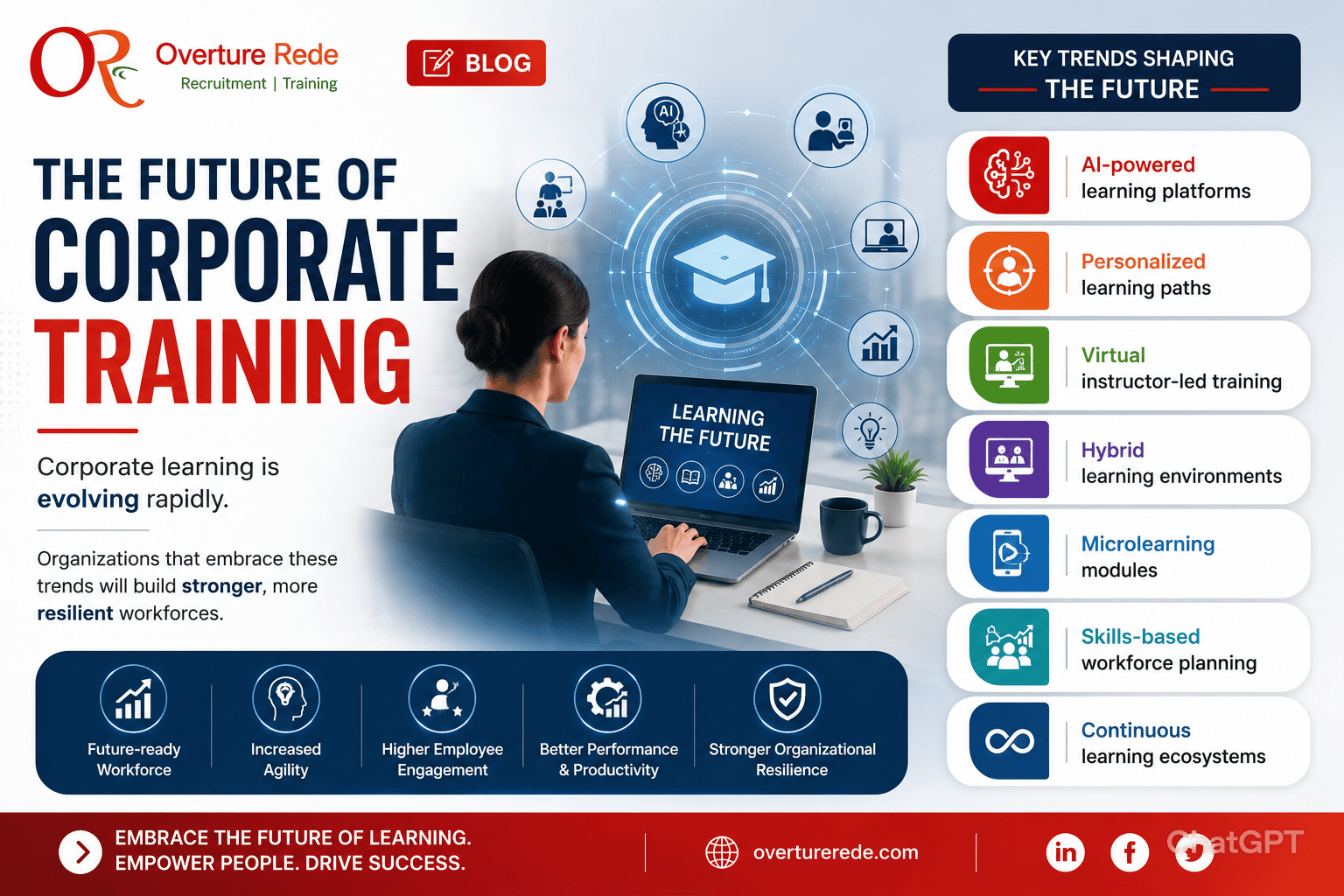
Corporate learning is evolving rapidly.
Key trends shaping the future include:
AI-powered learning platforms
Personalized learning paths
Virtual instructor-led training
Hybrid learning environments
Microlearning modules
Skills-based workforce planning
Continuous learning ecosystems
Organizations that embrace these trends will build stronger, more resilient workforces.
Conclusion
Conclusion
In 2026, corporate training is no longer a luxury—it is a business necessity
.
Organizations face increasing pressure to adapt to technological change, cybersecurity threats, digital transformation initiatives, and evolving customer expectations.
Corporate training empowers employees with the skills needed to thrive in this dynamic environment while helping organizations achieve:
Higher productivity
Improved employee retention
Greater innovation
Stronger cybersecurity
Better customer experiences
Increased profitability
Businesses that invest in workforce development today will be better prepared to navigate future challenges and seize emerging opportunities
.
The most successful organizations in 2026 will not simply be those with the best technology. They will be the ones with the most skilled, adaptable, and continuously learning workforce.

