

The Future of Enterprise Firewall Management and Cybersecurity Operations
As organizations continue to adopt hybrid cloud infrastructure, remote work models, artificial intelligence, and Zero Trust security frameworks, enterprise networks have become increasingly complex.
Today's enterprises require:
- Faster incident response
- Reduced Mean Time to Resolution (MTTR)
- AI-powered threat detection
- Intelligent security analytics
- Predictive troubleshooting
- Automated remediation workflows
- Skilled cybersecurity professionals
This is where Palo Alto Networks PAN-OS 11.1, Cortex XSIAM, and AI-driven security operations are transforming enterprise firewall management.
At Overture Rede, we help organizations build future-ready cybersecurity teams through Palo Alto Networks training, enterprise workshops, workforce development programs, and AI-driven SOC enablement initiatives.
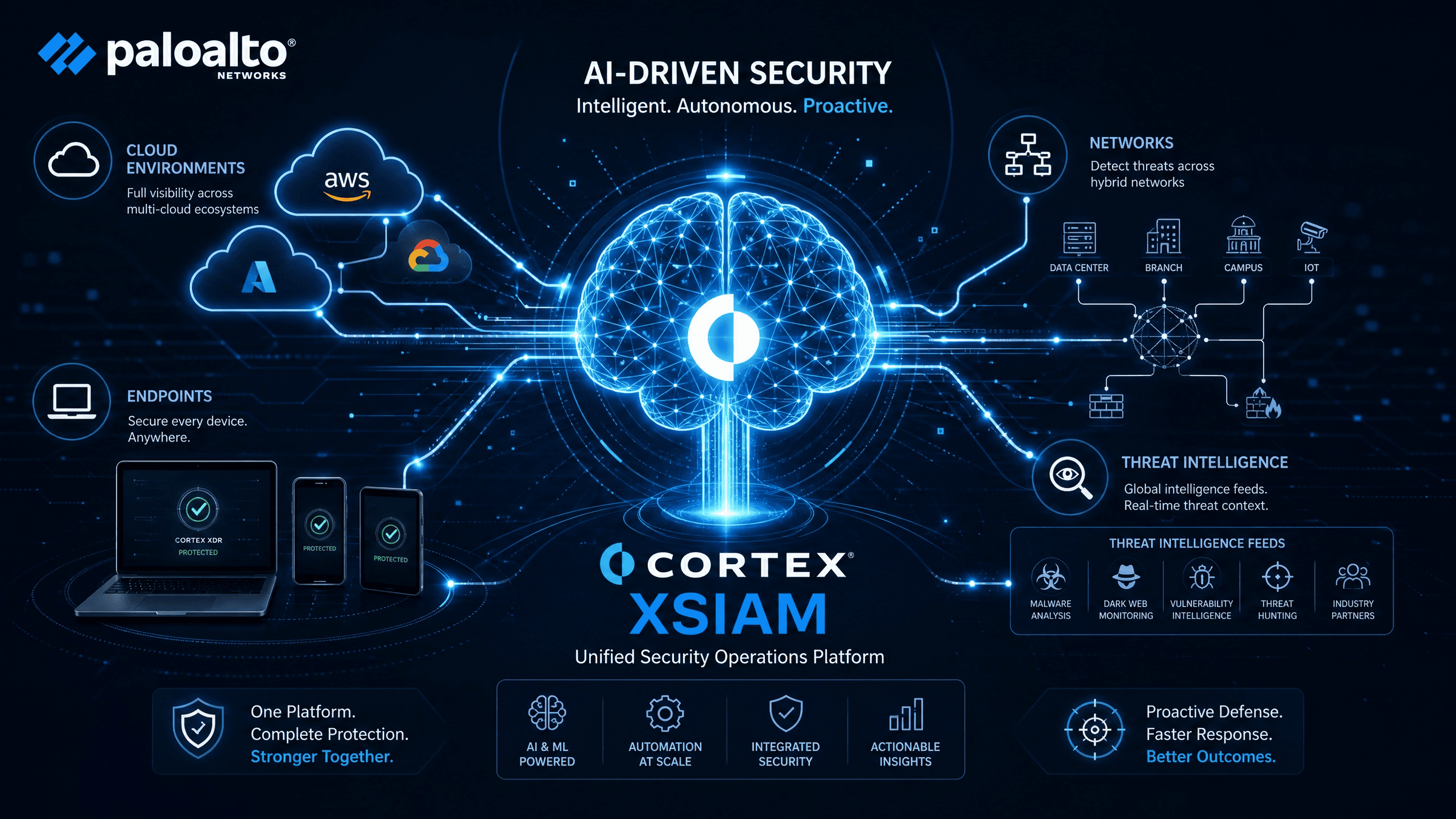
Why Traditional Firewall Troubleshooting No Longer Works
Why Traditional Firewall Troubleshooting No Longer Works
Modern enterprise environments generate millions of security events daily.
Security teams must manage:
- Multi-cloud environments
- Hybrid workforce security
- Encrypted traffic inspection
- Advanced malware attacks
- Remote access infrastructure
- Compliance requirements
- Security alert overload
Traditional firewall troubleshooting often depends on:
- Command Line Interface (CLI) diagnostics
- Manual packet captures
- Static log reviews
- Reactive incident investigations
- Human-driven correlation analysis
These approaches increase operational complexity and significantly extend downtime during critical incidents.
To overcome these challenges, enterprises are adopting:
- PAN-OS 11.1
- Cortex XSIAM
- Cortex XDR
- Machine Learning (ML)-based analytics
- AI-assisted Root Cause Analysis (RCA)
- Automated Security Orchestration (SOAR)
The result is a shift from reactive troubleshooting to proactive cybersecurity operations.

Understanding PAN-OS 11.1 Architecture
Understanding PAN-OS 11.1 Architecture
One of the most important foundations of advanced Palo Alto firewall troubleshooting is understanding the architectural separation between the Control Plane and Data Plane.
Control Plane Functions
The Control Plane manages:
- Configuration management
- Routing protocols
- Logging services
- Administrative access
- Panorama communication
- System management processes
Data Plane Functions
The Data Plane handles:
- Packet processing
- Session management
- Security policy enforcement
- Threat prevention
- SSL decryption
- Application identification
- Deep packet inspection
This separation enables high-performance traffic inspection while maintaining enterprise-grade security controls.
For firewall engineers and SOC analysts, understanding packet flow architecture helps quickly identify:
- Security policy mismatches
- Session establishment failures
- NAT translation conflicts
- Routing issues
- SSL decryption errors
- Application identification problem
How AI is Transforming Palo Alto Firewall Troubleshooting
How AI is Transforming Palo Alto Firewall Troubleshooting
Artificial Intelligence is rapidly becoming a critical component of enterprise cybersecurity.
With Cortex XSIAM and AI-powered analytics, organizations can:
- Aggregate millions of security logs automatically
- Detect network anomalies in real time
- Correlate events across environments
- Identify suspicious activity instantly
- Automate threat investigations
- Reduce Mean Time to Resolution (MTTR)
AI-driven security operations can automatically:
- Detect abnormal traffic spikes
- Identify lateral movement attacks
- Recognize encrypted malware behavior
- Trigger automated SOAR playbooks
- Isolate compromised devices
- Prioritize critical security alerts
This significantly improves operational efficiency and allows Security Operations Centers (SOCs) to focus on strategic threat response.

Advanced Palo Alto Firewall Troubleshooting Techniques
Advanced Palo Alto Firewall Troubleshooting Techniques
1. Packet Flow Diagnostics
Understanding packet flow is essential for effective troubleshooting.
Engineers can quickly isolate:
- Packet drops
- Session failures
- Security policy mismatches
- URL filtering issues
- Threat prevention actions
- Application identification problems
The PAN-OS packet processing pipeline typically includes:
- Packet Ingress
- Session Lookup
- Security Policy Evaluation
- NAT Processing
- Content Inspection
- Threat Prevention Analysis
- Egress Processing
This structured approach enables faster root cause identification across enterprise environments.
Understanding packet flow is essential for effective troubleshooting.
Engineers can quickly isolate:
- Packet drops
- Session failures
- Security policy mismatches
- URL filtering issues
- Threat prevention actions
- Application identification problems
The PAN-OS packet processing pipeline typically includes:
- Packet Ingress
- Session Lookup
- Security Policy Evaluation
- NAT Processing
- Content Inspection
- Threat Prevention Analysis
- Egress Processing
This structured approach enables faster root cause identification across enterprise environments.
2. SSL Decryption Troubleshooting
As more than 90% of internet traffic is encrypted, SSL inspection has become critical for enterprise security.
Common SSL decryption issues include:
- Certificate validation failures
- Unsupported cipher suites
- Mutual TLS (mTLS) conflicts
- Certificate Authority trust problems
- Public Key Pinning restrictions
Modern AI-enhanced PAN-OS environments can detect malicious encrypted traffic patterns even when payloads remain encrypted.
This helps organizations maintain privacy while improving threat visibility.
As more than 90% of internet traffic is encrypted, SSL inspection has become critical for enterprise security.
Common SSL decryption issues include:
- Certificate validation failures
- Unsupported cipher suites
- Mutual TLS (mTLS) conflicts
- Certificate Authority trust problems
- Public Key Pinning restrictions
Modern AI-enhanced PAN-OS environments can detect malicious encrypted traffic patterns even when payloads remain encrypted.
This helps organizations maintain privacy while improving threat visibility.
3. GlobalProtect Remote Access Troubleshooting
Remote access security is now a business-critical requirement.
Successful GlobalProtect troubleshooting requires validation of:
- User authentication
- Gateway communication
- HIP compliance checks
- Tunnel establishment
- User-ID mappings
- SAML integrations
- LDAP synchronization
- Endpoint posture validation
Organizations increasingly seek cybersecurity professionals who understand both networking and identity-driven security architectures.
Remote access security is now a business-critical requirement.
Successful GlobalProtect troubleshooting requires validation of:
- User authentication
- Gateway communication
- HIP compliance checks
- Tunnel establishment
- User-ID mappings
- SAML integrations
- LDAP synchronization
- Endpoint posture validation
Organizations increasingly seek cybersecurity professionals who understand both networking and identity-driven security architectures.
4. High Availability (HA) and Firewall Stability Management
Downtime can lead to operational disruptions, financial losses, and compliance risks.
Advanced High Availability troubleshooting includes:
- Split-brain analysis
- HA synchronization verification
- Session failover validation
- Resource monitoring
- Infrastructure health assessment
AI-driven monitoring platforms can proactively identify:
- CPU utilization anomalies
- Memory exhaustion risks
- Session table saturation
- Performance bottlenecks
This allows organizations to prevent outages before they impact business operations.
Downtime can lead to operational disruptions, financial losses, and compliance risks.
Advanced High Availability troubleshooting includes:
- Split-brain analysis
- HA synchronization verification
- Session failover validation
- Resource monitoring
- Infrastructure health assessment
AI-driven monitoring platforms can proactively identify:
- CPU utilization anomalies
- Memory exhaustion risks
- Session table saturation
- Performance bottlenecks
This allows organizations to prevent outages before they impact business operations.

Why Organizations Need Skilled Palo Alto Firewall Engineers
Why Organizations Need Skilled Palo Alto Firewall Engineers
The global cybersecurity skills shortage continues to challenge organizations worldwide.
Modern security teams require expertise in:
- Palo Alto Networks Firewalls
- PAN-OS Administration
- Cortex XSIAM Operations
- Threat Detection and Response
- Security Automation
- Incident Response
- Packet Analysis
- GlobalProtect Administration
- SSL Decryption
- Zero Trust Security
Investing in cybersecurity training is one of the most effective ways to strengthen enterprise resilience and reduce security risks.
Palo Alto Firewall Training and Cybersecurity Workforce Development by Overture Rede
Palo Alto Firewall Training and Cybersecurity Workforce Development by Overture Rede
At Overture Rede, we help organizations build high-performing cybersecurity teams through enterprise-focused training solutions.
Our programs include:
Palo Alto Networks Training
- Firewall Essentials
- Advanced Firewall Troubleshooting
- PAN-OS Administration
- Security Policy Optimization
AI-Driven Security Operations
- Cortex XSIAM Fundamentals
- SOC Modernization
- Security Automation
- Threat Hunting Techniques
Enterprise Security Workshops
- GlobalProtect Administration
- SSL Decryption Troubleshooting
- Advanced Packet Analysis
- Incident Response Planning
We provide:
- Instructor-Led Training
- Virtual Training Programs
- Onsite Corporate Workshops
- Hands-On Lab Environments
- Workforce Transformation Initiatives
- Hire-Train-Deploy Programs
- Train-Hire-Deploy Solutions
Overture Rede has supported IT and cybersecurity workforce development across more than 85 countries, helping organizations prepare for evolving technology and security challenges.
Benefits of AI-Powered Firewall Operations
Benefits of AI-Powered Firewall Operations
Organizations implementing AI-driven firewall management can achieve:
- Faster incident response
- Reduced operational downtime
- Improved threat visibility
- Enhanced SOC efficiency
- Lower alert fatigue
- Better compliance readiness
- Stronger remote workforce security
- Scalable cybersecurity operations
As enterprise environments continue to evolve, AI-powered security operations are becoming a critical competitive advantage.
Build AI-Driven Cybersecurity Operations with Overture Rede
Build AI-Driven Cybersecurity Operations with Overture Rede
Modern enterprises need cybersecurity teams capable of troubleshooting faster, automating intelligently, and securing complex hybrid infrastructures.
Overture Rede helps organizations strengthen cybersecurity capabilities through:
- Corporate Cybersecurity Training
- Workforce Development Programs
- AI-Driven SOC Enablement
- Enterprise Upskilling Initiatives
- Palo Alto Firewall Training
- Hire-Train-Deploy Solutions
- Train-Hire-Deploy Programs
Whether your organization is modernizing security operations, implementing AI-assisted threat detection, or building advanced Palo Alto expertise, Overture Rede delivers customized learning solutions aligned with your business objectives.
Contact Overture Rede Today
For customized corporate cybersecurity training, workforce development solutions, and Palo Alto Networks certification programs, visit:

